
Dear Customers,
Please note that we will be closed for the holiday period from 23rd July to 3rd August. Any orders placed during this time will be dispatched after we return, and replies to emails will also resume then. At the moment, we are unable to deliver PVC panels to some areas. Please contact us before placing your order for PVC wall panels.
Kind regards,
Team PanelDeals
Couldn't load pickup availability
We dispatch most products within 1 working day, with delivery usually arriving within 2–3 working days, excluding remote areas. PVC panels and accessories can take up to 3 weeks depending on your area, so please contact us before ordering PVC panels. Enter your postcode at checkout for an accurate delivery cost.
You can easily return any purchase within 30 days. For full details, check our delivery and returns policy.
Shop with total confidence. We use Shopify Payments exclusively for fast, safe checkouts across all devices.

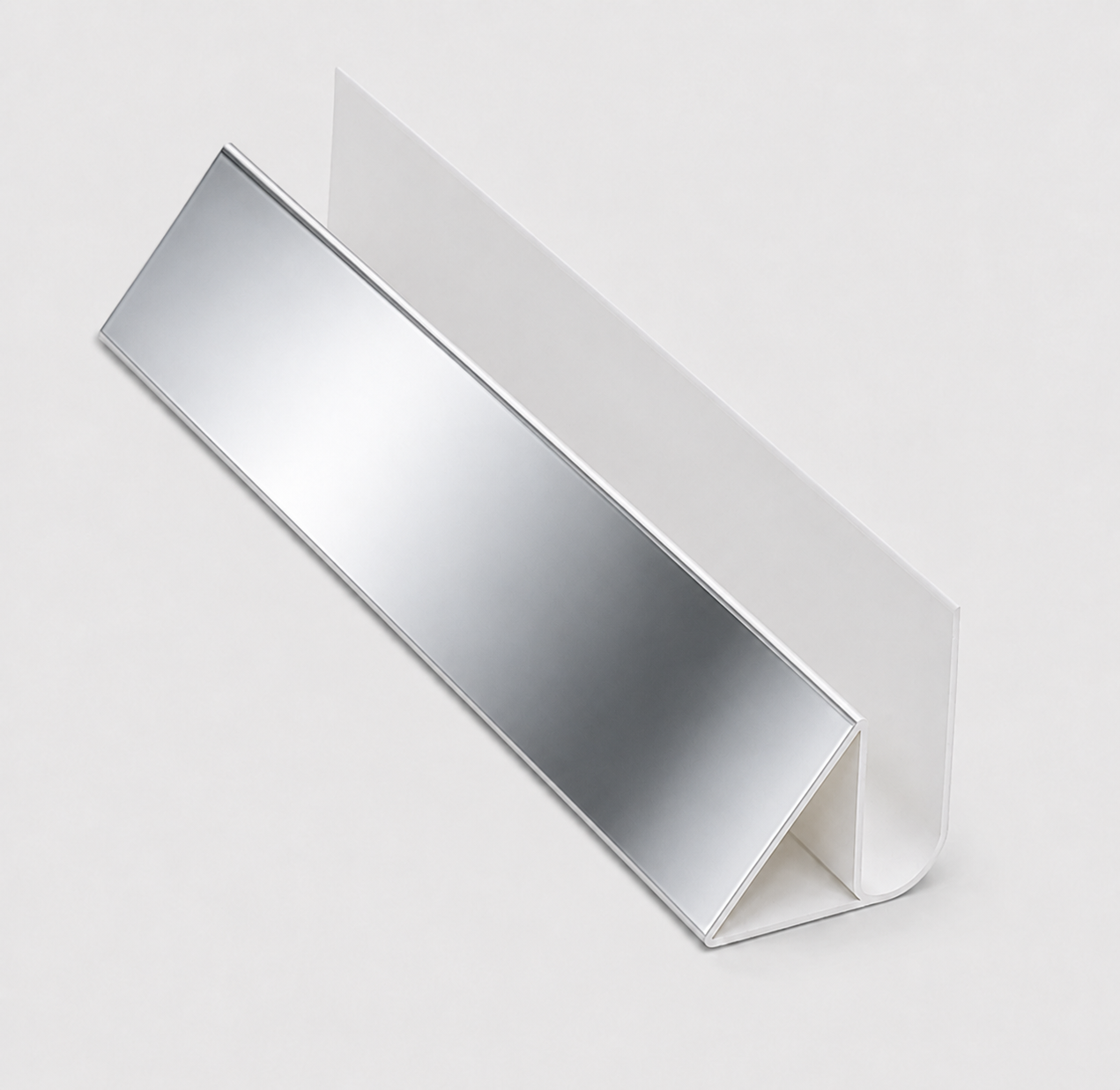
The PVC Wall Panel Coving Trim bridges the joint between the top of your wall panels and the ceiling. Without coving, panels stop with a visible cut edge against the ceiling — functional but unfinished. Coving covers that gap, masks any imperfect ceiling line, and provides a watertight seal in wet areas.
Total linear length of panels meeting the ceiling. A typical UK bathroom (4 walls, 2.4m wide each) needs around 9.6m of coving — 4 lengths of 2400mm.
How do I cut a 45° mitre?
Use a mitre saw or a mitre block with a fine-tooth saw. Practice on a scrap end first.
What if my ceiling isn't flat?
That's exactly what coving is best at hiding. Apply slightly extra adhesive, press into the ceiling line as best as possible, and silicone any visible gap.
Can I paint coving to match my ceiling?
White coving is best left white. PVC accepts paint poorly without a primer — better to choose a coving colour that matches the ceiling rather than painting.
Is it suitable for wet areas?
Yes — PVC coving is fully waterproof. Always silicone the joint to the ceiling for full water-tightness.
Internal corner trim · External corner trim · End cap trim · PVC ceiling panels

